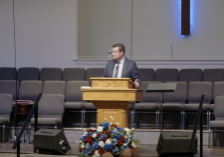
The podcast episode emphasizes the importance of finishing well in life, particularly in the context of transitions such as graduation. The speaker reflects on the swift passage of time, illustrating how quickly seasons change, especially in the lives of young individuals. Drawing on the Apostle Paul’s closing remarks to Timothy, the speaker highlights three crucial decisions necessary for a successful conclusion to one’s journey: fighting the right battles, running one’s unique race, and maintaining faith. The discussion underscores that the Christian life involves ongoing spiritual battles that require discernment in choosing worthwhile challenges. Ultimately, the episode encourages listeners to focus on their personal journey and the significance of staying faithful amid life’s transitions.
Takeaways:
- The podcast emphasizes the importance of recognizing that life operates in distinct seasons, with each having its unique challenges and opportunities for growth.
- Speaker A discusses the value of keeping one’s focus on the right battles in the Christian life, underscoring that these battles are often spiritual rather than personal.
- A significant point made is that each individual has a unique purpose and race to run, which requires the ability to concentrate on one’s own journey rather than comparing it to others.
- The speaker highlights that faithfulness is a decision that transcends emotions, marking it as crucial for a fulfilling Christian life.
- Another takeaway is the idea that transition seasons can serve as pivotal moments for spiritual development, revealing character and discipline.
- Finally, the podcast concludes with a call to action, encouraging listeners to make daily decisions to fight the right battles, to run their own race, and to maintain their faith.
Transcript
It goes by quick.
Speaker A:I know that your phones now do the memories.
Speaker A:They caught on from Facebook and realized that was a good thing.
Speaker A:So now your phones do the memories from your own photo album.
Speaker A:It goes by fast.
Speaker A:You know, a year ago this time I had a little, you know, angry, bald looking man.
Speaker A:That's what I had.
Speaker A:Now I have like a little, little girl that runs around and I can only imagine it just goes by like this.
Speaker A:But good job seniors.
Speaker A:Good job parents.
Speaker A:What an exciting day.
Speaker A:What an exciting time of life.
Speaker A:If you have your Bibles, turn to second Timothy chapter four.
Speaker A:Second Timothy Chapter Number four.
Speaker A:Before I read the passage in second Timothy chapter number four, as I was thinking about this evening specifically and thinking about the context of this passage, this passage from the book of Ecclesiastes came to mind.
Speaker A:It was written by King Solomon later on in his life.
Speaker A:And here's what he said.
Speaker A:Ecclesiastes chapter 3.
Speaker A:He said, to everything there is a season, and a time to every purpose under the heaven.
Speaker A:A time to be born, a time to die, a time to plant, and a time to pluck up that which is planted, a time to kill, a time to heal, a time to break down and a time to build up, a time to weep and a time to laugh, a time to mourn and a time to dance, a time to cast away stones, and a time to gather stones together, a time to embrace and a time to refrain from embracing, a time to get and a time to lose, a time to keep and a time to cast away, a time to rend and a time to sow, a time to keep silence and a time to speak, a time to love, a time to hate, a time of war and a time of peace.
Speaker A:The foundational truth of life is that it is inevitably based upon seasons.
Speaker A:And the unfortunate part of seasons is that seasons change.
Speaker A:Quite often you may enjoy the season of life you're in now, some of you empty nesters, some of you may enjoy the time of life you're in with kids in the house, or older kids or younger kids or whatever, the time or seasons of life you're in.
Speaker A:But the reality is that the seasons of life change awfully quick.
Speaker A:The Apostle Paul was very aware of this as he was writing from house arrest in Rome to Timothy, who was his beloved son in the faith, someone that he trained and mentored in Gospel ministry in his closing remarks to Timothy.
Speaker A:And it would be some of the last that he ever get a chance to speak to Timothy in his life in second Timothy chapter four, verse seven and eight here's what he said.
Speaker A:Paul said, I have fought a good fight.
Speaker A:I have finished my course.
Speaker A:I have kept the faith.
Speaker A:Henceforth there is laid up for me a crown of righteousness which the Lord, the righteous judge, shall give me at that day.
Speaker A:And not to me only, but unto them, all them also that love his appearing.
Speaker A:Let's pray.
Speaker A:Dear Lord, thank you for this day.
Speaker A:Lord, thank you for the opportunity to stop and honor the seniors tonight.
Speaker A:Lord, I pray that you would hide me behind the cross.
Speaker A:Lord, I pray that you would give me the words to say.
Speaker A:Lord, I pray that something I say is of help tonight.
Speaker A:Lord, I pray that you would help us to be doers of the Word and not just hearers only, Lord.
Speaker A:In Jesus name I pray.
Speaker A:Amen.
Speaker A:I'm a little afraid I may offend someone, but I'm gonna go there anyways.
Speaker A:,:Speaker A:It's week one of the college football season.
Speaker A:Texas A and M leads UCLA 44 to 10 at the close of the third quarter.
Speaker A:It's a sure game, right?
Speaker A:Everything's going to go on just fine.
Speaker A:UCLA would go on to score 38 unanswered points and win the game.
Speaker A:Not even in overtime.
Speaker A:They dominated the fourth quarter.
Speaker A:The Texas A and M team that year had a serious problem finishing the games.
Speaker A:Sorry, guys.
Speaker A:At the time, their coach was Zulman, who was well known because he had coached the great Johnny Manziel.
Speaker A:Johnny football.
Speaker A:He was well known.
Speaker A:He had had several good years there.
Speaker A:However, by the end of the season, Texas A and M would think that it would be better suited to pay him $10 million to sit on the couch and not coach.
Speaker A:By the way, the best job in the world is a fired college football coach.
Speaker A:I don't know how to get there, but if I can, I will.
Speaker A:I would like to be a fired college, college football coach.
Speaker A:You see, the Texas A and M team had a real problem finishing the game.
Speaker A:I think the same thing is true with many Christians.
Speaker A:We start well, but the Christian life is not about how we start, it's about how we finish.
Speaker A:Seniors, adults.
Speaker A:In these seasons of times and transitions, how we finish is more important than how we start.
Speaker A:Tonight we're going to talk about three decisions that we have to make in order to finish well.
Speaker A:And by the way, these decisions are decisions that we have to make each and every day.
Speaker A:I want you to notice first off there in verse number seven, Paul starts and he says, I have fought a good fight.
Speaker A:Can I tell you, first off, you have to fight the right battles.
Speaker A:You have to Fight the right battles.
Speaker A:Paul says, I have fought a good fight.
Speaker A:The Christian life is a spiritual battle.
Speaker A:I don't know if that is something that has really gratified reality more in the last couple years of my life than this truth.
Speaker A:Sometimes we think the Christian life is something that is effort based.
Speaker A:The more effort I put into it, the better it's going to be, the smoother it's going to go, et cetera, et cetera.
Speaker A:But the reality is that there is a very real enemy that is seeking to derail whatever we're trying to do.
Speaker A:We have to fight the right battles because the Christian life is a spiritual battle, right?
Speaker A:Ephesians, chapter 6, verse 12 teaches us that we wrestle not against flesh and blood, but against principalities and powers, against the rulers of darkness of this world, against spiritual wickedness in high places.
Speaker A:Can I just tell you I can fight with the best of them I can.
Speaker A:Part of my job here is working with the technology.
Speaker A:And honestly, every printer I've ever seen, every printer needs to be kicked every once in a while.
Speaker A:It's actually right there in the maintenance manual.
Speaker A:If you look at it, it's right in the back where, you know, it's a different language, you just have to read between the lines.
Speaker A:But it says right there, you got to kick them.
Speaker A:You got to fight these machines sometimes.
Speaker A:But I can also be cantankerous too, right?
Speaker A:When I don't get my way, when I don't think something's going the way it should, I get a little cantankerous.
Speaker A:But the reality is we have to fight the, the right battles.
Speaker A:We wrestle not against flesh and blood.
Speaker A:That means we don't wrestle against people, right?
Speaker A:That's not the main primary enemy.
Speaker A:The enemy is the principalities and the powers and the rulers of darkness of this world against the spiritual wickedness in high places.
Speaker A:Paul was very aware of this fact.
Speaker A:In fact, in the end of his first letter to Timothy in Chapter 6, he said, Fight the good fight of faith, right?
Speaker A:Lay hold on eternal life where unto thou are also called.
Speaker A:The Christian life is a spiritual battle.
Speaker A:There's always going to be battles in the Christian life.
Speaker A:The battles are temptation, the battles are compromise, pride, peer pressure, spiritual laziness.
Speaker A:All these things are battles that we have to face each and every day in our lives.
Speaker A:Seniors, as you go into college and you move into the next seasons of life, these are things that you're going to have to face each and every single day.
Speaker A:As I mentioned beforehand, the Great statement by Dr. Shetler, there are banner days There are battling days and there are building days.
Speaker A:Yes, you just had a banner day.
Speaker A:But be prepared for a whole lot more building and battling days before your next banner day.
Speaker A:Right?
Speaker A:Not only do we see that the Christian life is a spiritual battle, but Christians must choose worthwhile battles.
Speaker A:I like the phrase here.
Speaker A:He says, fight the good fight.
Speaker A:Not every fight is worth fighting.
Speaker A:,:Speaker A:Not every fight is worth fighting.
Speaker A:It just ain't.
Speaker A:Oh, come on.
Speaker A:You guys know I'm right.
Speaker A:We don't fight everything.
Speaker A:You know what?
Speaker A:We do things different.
Speaker A:She grew up different than me.
Speaker A:She's very thankful that I grew up different from her.
Speaker A:But, like, we grew up different from each other.
Speaker A:And that means we have different ways of looking at things and doing things.
Speaker A:And it's not worth every battle that comes across.
Speaker A:And you just learn very quickly.
Speaker A:You learn to deal with it.
Speaker A:You know, the same thing is true in the Christian life.
Speaker A:Not every battle is worth battling.
Speaker A:As you grow up and you're exposed to things, especially as you start getting into the adult world, not every battle is worth fighting.
Speaker A:Everybody has to be just like you.
Speaker A:One of my favorite statements, I forget who told me, it may be a Dr. Chappell thing, but he said, you know, you don't have to be twins in order to be brothers.
Speaker A:You have to fight the good battle, the good fight, right?
Speaker A:We must choose worthwhile battles.
Speaker A:We're lucky that scripture gives us the battles that are worth fighting.
Speaker A:In First John, chapter number two, the apostle says, love not the world, neither the things that are in the world.
Speaker A:If any man love the world, the love of the Father is not in him.
Speaker A:For all that is in the world, the lust of the flesh, the lust of the eyes and the pride of life is not of the Father, but is of the world.
Speaker A:You know what's worth fighting for?
Speaker A:Holiness.
Speaker A:Truth.
Speaker A:God's word, Everything that's on the side.
Speaker A:The lust of the flesh, the pride of life, all of those things, those really ought to be secondary to the Christian.
Speaker A:Those shouldn't be something that we make the forefront of our lives because we're saved.
Speaker A:I told the kids I had an opportunity to preach at Northwest High School, the FCA club, on Friday morning.
Speaker A:And I told them, I said, it's quite interesting that Christians often get mad at lost people for living like they're lost.
Speaker A:They're just doing what their granddaddy Adam taught them, right?
Speaker A:That's not the worthwhile battle.
Speaker A:The battle is for their souls.
Speaker A:The Battle is for them as people, right?
Speaker A:Matthew, chapter six.
Speaker A:Jesus told us where our focus ought to be.
Speaker A:He said, seek ye first the kingdom of God and his righteousness, and all these things will be added unto you.
Speaker A:In other words, our perspective as Christians.
Speaker A:Our job as Christians is to place our eyes directly and squarely on Jesus, and he will show us the right battles to fight.
Speaker A:As you enter into adulthood, there are things that really are worth battling for.
Speaker A:Your purity, your testimony, your walk with God, your future, your calling.
Speaker A:All those things are worth battling for.
Speaker A:And by the way, you're going to have to battle for it.
Speaker A:Every single one of them, I think, has really strong direction on what to do in life and seemingly has leading from the Lord with what to do.
Speaker A:Those callings that come in vocation are not something that you just get to breeze through all four years and then all of a sudden find yourself there doing it right.
Speaker A:We started talking about David in our Sunday school class, and David is such an interesting character because before he was ever king, there was a whole lifetime of preparation in the field as a shepherd, before you ever get a chance to live out the calling that God has given you, there is a serious preparation time that God has placed in your life that you have to remain faithful in.
Speaker A:That's where the focus ought to be.
Speaker A:So then we see that we have to the good fight.
Speaker A:And then Paul says, I have finished my course.
Speaker A:Secondly, we need to run your race.
Speaker A:You have to decide to run your race.
Speaker A:I am not a racer.
Speaker A:I don't need to tell you all that.
Speaker A:Not a racer in a car.
Speaker A:Maybe you put me in a car.
Speaker A:I can.
Speaker A:I can put my foot on the pedal as long as there's not too much resistance, you know, I'm not a racer, though.
Speaker A:Not a sprinter, not a marathon runner.
Speaker A:But that's what the Apostle Paul chooses to illustrate the Christian life as.
Speaker A:But he gives a very interesting phrase.
Speaker A:He says, I have finished my course.
Speaker A:God has a specific purpose for each and every one of us.
Speaker A:Paul didn't say, I have finished someone else's course.
Speaker A:He said, I have finished my course.
Speaker A:God has a unique race for each and every believer.
Speaker A:It's interesting as we think about this concept of the unique race in the Christian life, right?
Speaker A:Because mine is different than yours and yours is different than yours, and we're all different from each other.
Speaker A:And I'm thankful for that.
Speaker A:Y' all ever gone to like a high school track meet or a college track meet?
Speaker A:You ever see some of those races?
Speaker A:They're crazy, right?
Speaker A:You have Some that are like the 500 meter dash and they're not very long.
Speaker A:You guys know what I'm talking about, right?
Speaker A:And they just go around the lap a couple times and you have the 800 meter dash and then you have the really long one.
Speaker A:And those runners are usually somewhat built for those courses.
Speaker A:Really, whichever one they end up excelling in is actually almost down to the way they're both body is structured.
Speaker A:It's almost like they're built to be a runner in a long distance race or they're built to be a short distance runner.
Speaker A:And then every once in a while you have those courses that have the little jumpy things on them.
Speaker A:You guys know what I'm talking about, right?
Speaker A:I don't know what they're called.
Speaker A:Hurdles.
Speaker A:They have the hurdles on them.
Speaker A:Yeah, that makes sense.
Speaker A:They have the hurdles on them, right?
Speaker A:Man, I'm so glad that I'm not a runner with the hurdles.
Speaker A:Can you imagine how embarrassing that would be?
Speaker A:I know for me, I don't know about y'.
Speaker A:All.
Speaker A:I know what would happen to me if I was running a race with hurdles on it.
Speaker A:I would fall flat at every single hurdle, eventually get mad and just start throwing the things out of the way.
Speaker A:You know, I'll take the penalty, whatever it is.
Speaker A:My race is different than each and every one of yours.
Speaker A:And if we get too focused on other people's, we miss the specific race that God has for our life.
Speaker A:Hebrews chapter number 12.
Speaker A:It says that wherefore we are also compassed about with so great a cloud of witnesses.
Speaker A:Let us lay aside every weight and the sin which doth so easily beset us, and let us run with patience the race that is set before us.
Speaker A:There's an element of patience that happens in the race.
Speaker A:NASCAR races are very long, not disparaging the sport any.
Speaker A:This is the scary time of year.
Speaker A:Football's over.
Speaker A:College basketball is over.
Speaker A:There's not much to watch on tv.
Speaker A:If it comes down to it, I'll put on a race.
Speaker A:But it's interesting.
Speaker A:You have to have a lot of patience to be a race car driver and a race car fan.
Speaker A:Watch 500 miles.
Speaker A:Takes some patience, doesn't it?
Speaker A:You know, the Christian life requires some patience.
Speaker A:It's not something that we just immediately arrive at.
Speaker A:It's something that we have to each and every day choose to live with patience and set aside the weights and the distractions and the sins that does so easily beset us so that we can run with patience, the race that the lord has for us.
Speaker A:Jeremiah, chapter 29.
Speaker A:He says, For I know the thoughts that I think toward you, saith the Lord, thoughts of peace, not of evil, to give you an expected end.
Speaker A:What an interesting thought that God has an expected end for each and every one of us.
Speaker A:It's weird to sit back and think about God who exists outside of space and time, because we only think of time as linear, right?
Speaker A:We think of time as past, present, as in right now, and that's already past.
Speaker A:And then future.
Speaker A:We think of it almost like a straight line that just goes forever.
Speaker A:But God, outside of time, stands and is able to see all of it at once.
Speaker A:He's like looking at a picture, and he sees all of time all at once.
Speaker A:So while we're sitting in our midst of our lives and we're wondering, what on earth is God doing?
Speaker A:Where are you directing us?
Speaker A:What do you have going on?
Speaker A:In my race, God says, I have an expected end for you.
Speaker A:I see an end result already that you don't see.
Speaker A:That is a race that we have to run.
Speaker A:And Paul ran his race.
Speaker A:So not only do we see that God has a specific purpose for every life, but comparison will distract you from your purpose.
Speaker A:I have finished my course.
Speaker A:I again, I'm so thankful that I don't have the course of other people.
Speaker A:And some of you probably look at me and you're like, I'm really glad I don't live your course.
Speaker A:And that's the way God designed it.
Speaker A:That's the way he intended it, right?
Speaker A:Because it's my race.
Speaker A:It's not your race.
Speaker A:It's my race.
Speaker A:Your race is different than her race, who's different than his race.
Speaker A:And all of the above.
Speaker A:You see, as we grow older and we grow in our Christian life, the temptation is to compare ourselves across lines of followers or popularity or talent or even appearance or what the world might define as success.
Speaker A:But the reality is we cannot run effectively while looking sideways.
Speaker A:You can't do it.
Speaker A:And if you think you can, go watch some YouTube on it, it's awesome.
Speaker A:You'll see the guys and they're running and they're looking.
Speaker A:All of a sudden they run into a pole or run into the hurdle or something like that.
Speaker A:Because the reality is, running your race, you have to keep your eyes dead focused on what's ahead.
Speaker A:I think it was Thursday night at the high school graduation.
Speaker A:Brother Barker mentioned Psalm 119, 105.
Speaker A:Thy word is a lamp unto my feet.
Speaker A:And he said, the beauty of a lamp is that it only illuminates the next step.
Speaker A:I don't see the expected end.
Speaker A:I don't see my whole race.
Speaker A:I don't see my whole course.
Speaker A:If I did, the obstacles wouldn't be much of obstacles, would they?
Speaker A:Instead, the guidance from the word, the guidance from the Lord, what can I see?
Speaker A:The next step.
Speaker A:Sometimes that next step looks like a day in advance.
Speaker A:Sometimes it looks like an hour in advance.
Speaker A:Sometimes it looks like a week or a month in advance.
Speaker A:But that next step is what we must run with.
Speaker A:Patience.
Speaker A:Not looking side to side, but what's ahead.
Speaker A:By the way, to continue that analogy, a lamp doesn't give enough light to look at what my friend is running with, right?
Speaker A:If we're really focused on God's word in our life and we're really focused on what is next and ahead of us, there's no room for looking to the side and seeing what's going on.
Speaker A:By the way, I'm sure Timothy was probably awfully glad he didn't have Paul's course to run, right?
Speaker A:The Apostle Paul did not have a very fun life.
Speaker A:In fact probably like 0 out of 10 experience.
Speaker A:He says, 5 times received I 40 stripes.
Speaker A:Saved ones of the Jews, right?
Speaker A:4 Times I received 39 stripes.
Speaker A:He said, a night and a day in the deep.
Speaker A:Not a beach guy.
Speaker A:If I spend any time in the deep, it's a bad day.
Speaker A:But he spent a night and a half in the deep like he lived a rough life.
Speaker A:And I'm sure Timothy's probably reading this from his non house arrest pending execution where he was and he's like, yeah, I'm glad I'm not running that race.
Speaker A:Good job, Paul.
Speaker A:But I'm glad it's not me.
Speaker A:Comparison can very quickly distract from your purpose, but it's also a thief of joy.
Speaker A:If we're so focused with what's going on with everyone else, it's going to be so hard to be happy with what's going on in my life.
Speaker A:Galatians, chapter 6, verse 4.
Speaker A:He says, Let every man prove his own work, and then shall he have rejoicing in himself alone and not in another.
Speaker A:Prove your own work.
Speaker A:Don't be so focused with everyone else.
Speaker A:I could tell you can name names too.
Speaker A:But we won't do that because that's bad.
Speaker A:And we're on the Internet and I'm Facebook friends with most of them, but I can name names of people I went to college with.
Speaker A:Who everyone in the college.
Speaker A:They won the preacher boy competition and all the staff had their favorites and they were there and this and that.
Speaker A:And they were like, you know, the next Billy Sunday reincarnate, you know, but they got distracted, they fell off.
Speaker A:Don't get distracted with everyone else.
Speaker A:They focus on your race.
Speaker A:Kind of a controversial figure, but Norman peale in the 19th century wrote one of the first faith based self help books.
Speaker A:But he said a very interesting quote in it.
Speaker A:He said, it is always too soon to quit.
Speaker A:It's true.
Speaker A:God doesn't call us to quit.
Speaker A:He calls us to keep moving forward every single day, every single week.
Speaker A:It is always too soon to quit.
Speaker A:Peter, seeing him, saith to Jesus, lord, what shall this man do?
Speaker A:And Jesus said unto him, if I will, that he tarry till I come, what is that to thee?
Speaker A:Follow thou me.
Speaker A:Jesus said basically the same thing.
Speaker A:Doesn't matter what I'm doing with John Peter, it doesn't matter what I'm doing with Tyler.
Speaker A:It doesn't matter what I'm doing with whoever follow thou me.
Speaker A:So the first decision we have to make is we have to make the decision to fight the right battle.
Speaker A:Secondly, we have to make the decision to run your race.
Speaker A:But thirdly, you have to make the decision to keep the faith.
Speaker A:Look at the third part of that verse there.
Speaker A:He says, I have finished my course and I have kept the faith.
Speaker A:What a broad statement.
Speaker A:I have kept the faith.
Speaker A:I don't know if you've ever liked, seen a set of theology books from beginning to end, like, if that's what we call the faith.
Speaker A:There's an awful lot in there, right?
Speaker A:What's he teaching here?
Speaker A:He's saying that faithfulness matters more than emotion.
Speaker A:We talked about this last week a little bit, right?
Speaker A:Faithfulness is a decision that we can make.
Speaker A:Emotion is what we feel.
Speaker A:We don't always feel what we ought to be doing, but faithfulness is what matters.
Speaker A:As a teenager you get maybe more to an extreme than we do as an adult, you get, I call it Camp Christianity, where you get the opportunity every year.
Speaker A:And it's a great opportunity.
Speaker A:And it's by far the best spiritual opportunity that our kids have.
Speaker A:But they put their phones away, they go to a place that they know in their minds that the Lord works.
Speaker A:And they're disconnected from everything else except from their friends and from God.
Speaker A:And God always works in their heart every year.
Speaker A:The challenge with that is there's a lot of people that learn to live off of Camp Christianity.
Speaker A:They need the yearly, annual quarterly jolt.
Speaker A:The reality of being an adult and moving into a mature Christian faith is learning that faithfulness matters more than the emotion you might feel at camp.
Speaker A:And while even as adults, I still enjoy camp, I still enjoy the revival meetings, I still enjoy preacher fellowships, I still enjoy all of these things, things that we do, you have to learn to move beyond that in your Christian life.
Speaker A:You can't live off of that.
Speaker A:The apostle Paul talks about spiritual babes who are living off of milk rather than meat.
Speaker A:You're not going to live off of one meal a year, especially if you move away and go somewhere to college.
Speaker A:You need to learn to feed yourself.
Speaker A:You need to learn to dig into the Word and get your own meat.
Speaker A:Faithfulness matters more than emotion.
Speaker A:Revelation, chapter 2, verse 10 says, Be faithful unto death, and I will give thee a crown of life.
Speaker A:Every year we get a gift for the teens and the graduates.
Speaker A:Not all the teens, but we get a gift for the graduates.
Speaker A:And this year we got them a book, but we also got them a journal.
Speaker A:And I wouldn't normally talk about this, but, Matt, yours is special.
Speaker A:There's only one of them, and so it's kind of masculine anyways.
Speaker A:You guys wouldn't like it, but if there's three, I was going to get it because it's a leather journal, and on the front it has the inscription good plus faithful.
Speaker A:And then on the back is this verse Revelation 2:10.
Speaker A:And it's a reminder every time you look at it that that is the qualifications of a faithful Christian life is to be good and to be faithful.
Speaker A:And for all of them who are faithful unto death, I will give thee a crown of life.
Speaker A:First Corinthians 15.
Speaker A:He says, Thou, therefore, my brethren, be steadfast, be unmovable, always abounding in the work of the Lord.
Speaker A:Right?
Speaker A:We should be unmovable in our faith.
Speaker A:It's something that even though whatever may come our way, whatever may shake us, we can stand firm in the faith that God has given us, because we understand that.
Speaker A:It doesn't matter necessarily how I feel.
Speaker A:What matters is the faithfulness that is behind it.
Speaker A:So not only do we see that faithfulness matters more than emotion, but transition seasons are often a spiritual turning point.
Speaker A:If you think about your schooling years, you think about the time that you were in high school.
Speaker A:Summer is always a big season.
Speaker A:You get out of the rhythm that you get into.
Speaker A:The summer slump is a very real theme, by the way, in churches, because you get out of the rhythm.
Speaker A:You're out on vacation, whatever it may be, right?
Speaker A:But you get out of the routine that you have dug into, out of the established habits that you have as you're Following Lord's will.
Speaker A:And you learn to realize that these transition seasons can be very significant in your spiritual life.
Speaker A:In fact, transition seasons often either strengthen faith or weaken it.
Speaker A:See, when structure disappears, that's when you see your character.
Speaker A:That's when your discipline is tested, and that's when your priorities become obvious.
Speaker A:Sometimes, if we're not careful as church members or bystanders, we can look at students who have finished college or students who are finishing high school.
Speaker A:And at the end of the summer, we can look back and be like, wow, they change so fast.
Speaker A:They didn't change.
Speaker A:It just revealed what was already there.
Speaker A:If you're going through a season of transition in your life, can I encourage you to think through that same thing?
Speaker A:It's easy to point at students and be like, oh, yeah, well, the structure of school, gone, and they're all lazy now.
Speaker A:Okay, what about when things change in my life?
Speaker A:When my structure is gone, when my flow and rhythm are out of sync, what happens then?
Speaker A:What's revealed in my life?
Speaker A:What's shown in my life?
Speaker A:That's when the discipline becomes really important.
Speaker A:Staying in church, staying in Bibles, in your Bible, staying around godly influences accountability.
Speaker A:Staying clean spiritually.
Speaker A:You may say, all those things are for teenagers.
Speaker A:No, they're not.
Speaker A:They're like foundational truths of the Christian life.
Speaker A:No matter what's happening in our life, these are things that ought to remain in each and every one of our lives.
Speaker A:You may say, well, I'm here now, aren't I?
Speaker A:I'm staying in church.
Speaker A:You know, staying in church, like, also means being plugged into church too, right?
Speaker A:Bodies in the seats don't really count.
Speaker A:It's being a part.
Speaker A:Being, enjoying a part of it.
Speaker A:Staying in your Bible doesn't mean just in the morning, did it?
Speaker A:Done.
Speaker A:No, but actually digging into the word, finding something to apply to your life and hold onto each and every day.
Speaker A:I think one of the hardest things as we dig into our adult lives is staying around godly influences.
Speaker A:Your relationships get deeper as you get older, and it's not just like, well, that's my buddy that I hang out with at school.
Speaker A:It's like, well, this is my best friend that I've known for 15 years or 20 years or, you know, 30 years or 40 years or however long it is, right?
Speaker A:It becomes harder.
Speaker A:But what happens when they're no longer a godly influence on your life?
Speaker A:All the things that we would like to say to teenagers still apply to us too.
Speaker A:Right?
Speaker A:We always talk about.
Speaker A:And again, it's so Easy.
Speaker A:When we look at others, and not as ourselves, but we look at others and we're like, ah, those friends are gonna drag them down.
Speaker A:What about your friends?
Speaker A:Are your friends gonna bring you up or are they gonna drag you down?
Speaker A:It's a true statement.
Speaker A:If you want to know what you'll look like in five years, look at your friends.
Speaker A:That's it.
Speaker A:But the seasons of transition are very vulnerable moments spiritually in your life.
Speaker A:There are moments where if you're not careful, you let your guard down, you feel a little bit of freedom.
Speaker A:No longer 8am classes and no more 6am basketball practices or after school volleyball practices or whatever it may be, and you feel a little bit of freedom.
Speaker A:And the temptation is to lose the spiritual discipline that you've instilled in those routines.
Speaker A:It takes intentional, focused decisions to choose to stay faithful, even in moments of transition.
Speaker A:They are often spiritual turning points.
Speaker A:The most amazing part of this entire verse is that Paul could honestly say, I have fought the right fight, I have ran the right race, and I have kept the faith.
Speaker A:I always think about this every time I read this.
Speaker A:Paul was writing under the inspiration of the Holy Spirit, meaning what he wrote down in a definitive statement cannot be a lie.
Speaker A:I could lie to you tonight and say the same words and say that this is true about Tyler's life, but it's not.
Speaker A:And I find the most interesting part about this is Paul looked at this and by his own life, under inspiration of the Holy Ghost, could look back and say, I did a pretty good job.
Speaker A:I did pretty good.
Speaker A:He never claimed perfection, but he looked back and he said, generally speaking, I did the right things that a Christian should do.
Speaker A:So the challenge is real simple.
Speaker A:Tonight there are three decisions that we have to make each and every day.
Speaker A:We have to fight the right battles, we have to run our race, and we have to keep the faith, keep it, hold on to it, cherish it.
Speaker A:Will you make those three decisions each and every day as we all stand with our head bowed and eyes closed as our musicians make our way to the four, to the.
Speaker A:To the front.
Speaker A:We'll have a verse of invitation after we pray.
Notice a problem?
Our sermon archive represents hundreds of hours of cataloging and dedication by staff and volunteers, but we do not always get things right. Report wrong preachers, titles, or mismatched videos here.